
Cycling Around Taiwan on Route No. 1: My Complete Guide After One Month Around the Island
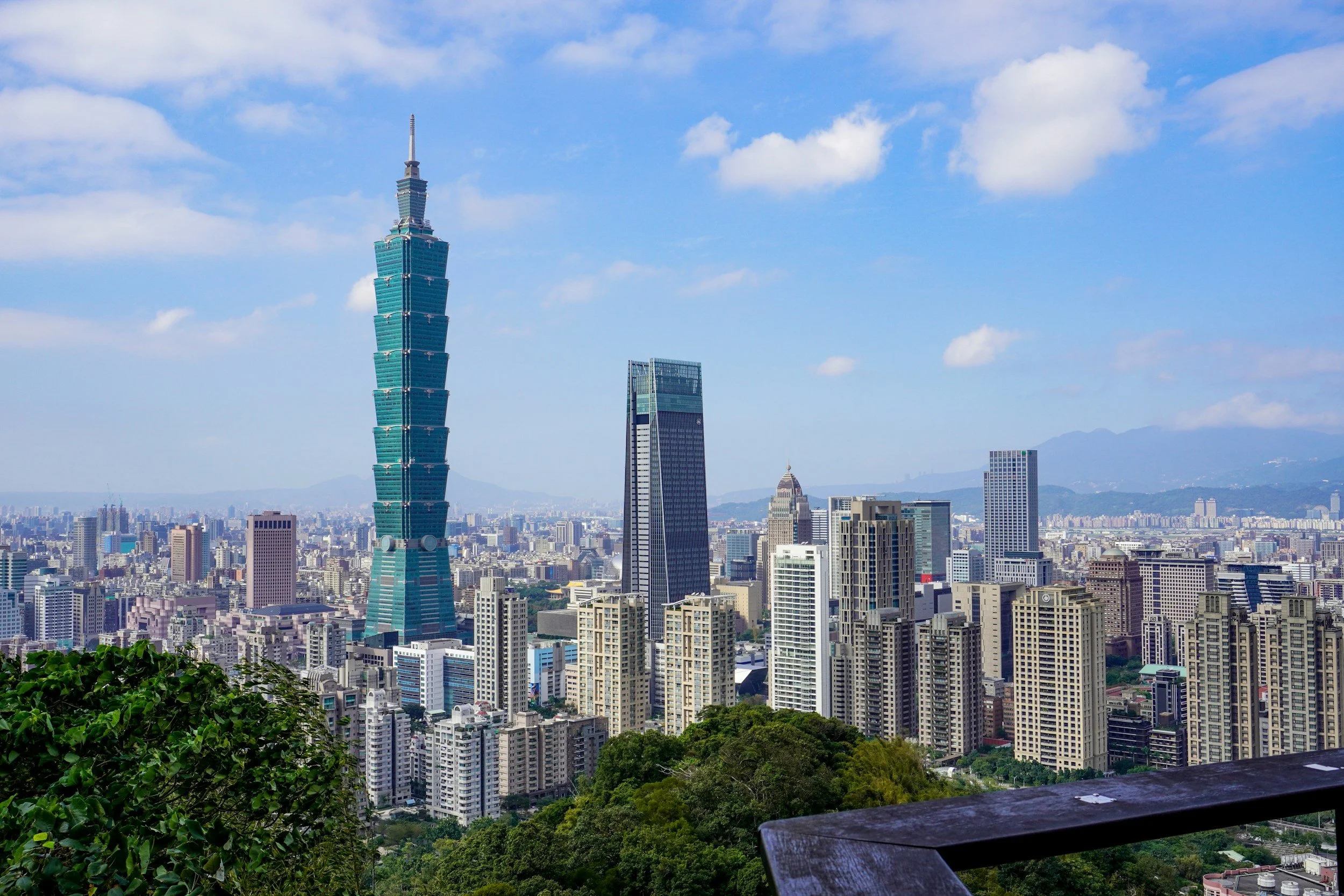
Less than three months before this bike ride, I decided that my body needed an adventure.
Not an extreme adventure. Not a race. Just something fun, safe, and slightly outside of my comfort zone.
That decision eventually landed me in Taiwan, a country well known worldwide for cycling and home to one of the most famous bikepacking routes in Asia.
In 2015, Taiwan launched Cycling Route No. 1, a route that circles the entire island and allows cyclists to experience mountains, coastlines, cities, forests, farmland, fishing villages, and local culture all within one journey. Since then, Taiwan has proudly marketed itself as a Cycling Paradise.
After spending a month cycling around the island, I can confidently say that the title is well deserved.
But don't mistake paradise for easy.
There were strong headwinds, long climbing days, rainy mornings, sore muscles, barking dogs, unexpected detours, and moments where I questioned my own decisions.
At the same time, there were breathtaking coastal roads, peaceful rice fields, mountain forests, delicious food, kind strangers, and a deep sense of freedom that's difficult to describe unless you've experienced it yourself.
Before continuing, it's important to mention that I am not a professional cyclist. I'm simply someone who enjoys riding a bicycle and uses it regularly for transportation and daily errands.
This journey was never about speed, competition, or setting records.
It was about balance.
The balance between work and travel.
Between movement and stillness.
Between physical strength and mental clarity.
As an online worker, I continued working throughout the trip. Some days were dedicated to cycling, while others were spent resting, exploring, working from cafés, stretching, meditating, or simply watching life unfold around me.
I wasn't trying to conquer Taiwan.
I was trying to experience it.
As I discovered the island, I was also discovering parts of myself.
There were meditation sessions in parks, yoga stretches on random sidewalks, journaling in 7-Eleven corners while waiting for the rain to stop, conversations with strangers despite language barriers, and countless moments of silence where the only sound I could hear was my tires rolling along the road.
If you're thinking about cycling around Taiwan, this guide includes everything I learned along the way, from packing and route planning to food, weather, accommodation, safety, and the lessons only the road can teach.
Why Taiwan Is One of the Best Places in the World to Cycle
Taiwan offers something very few countries can offer within such a small area.
Within a single day you can ride through modern cities, quiet fishing villages, endless rice fields, tea plantations, tropical countryside, mountain forests, and dramatic coastal highways.
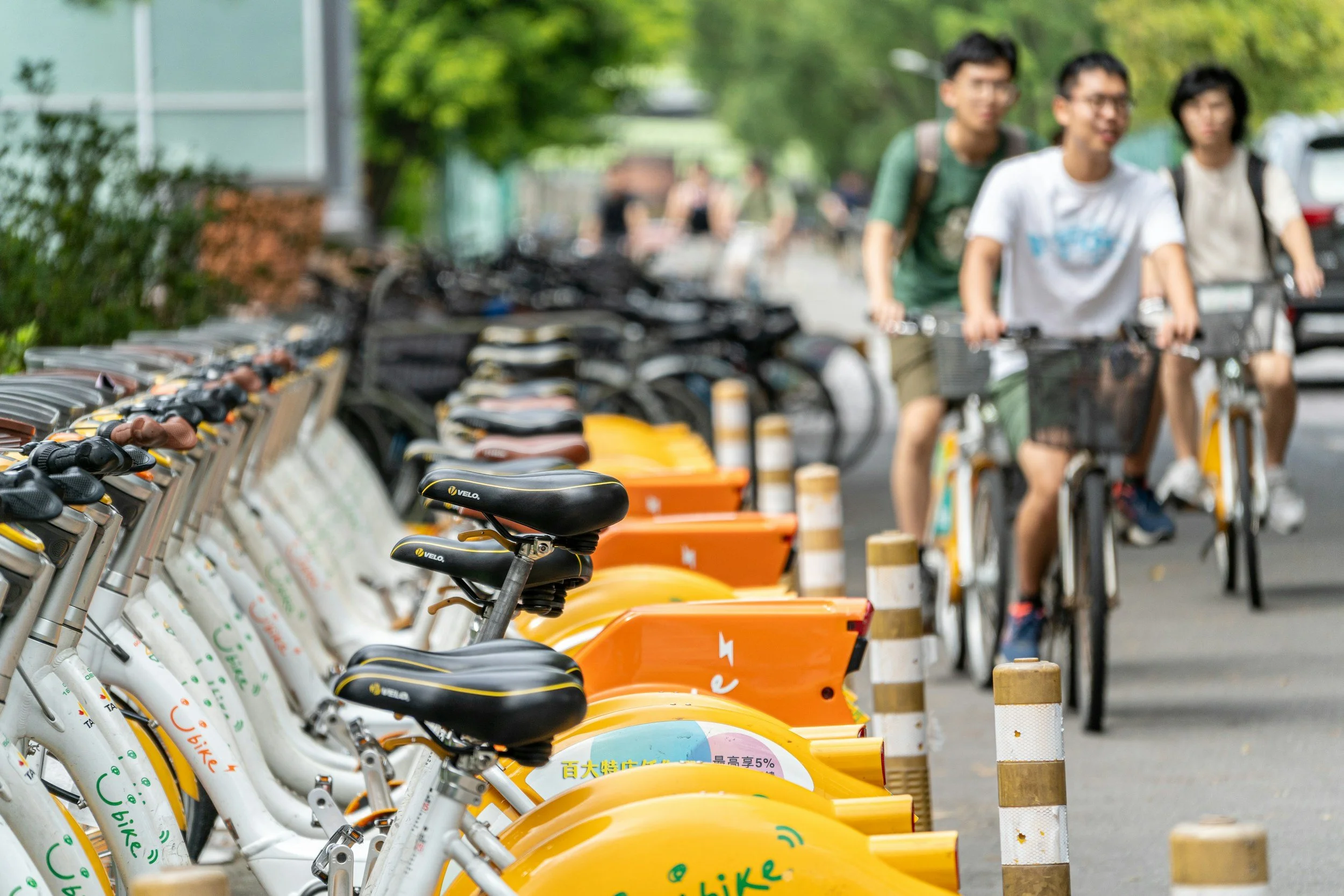
The infrastructure is excellent, the roads are generally well-maintained, convenience stores are everywhere, and there's a strong cycling culture throughout the island.
One of the things I loved most was how accessible everything felt. Whether I needed food, water, accommodation, bike supplies, or simply a place to rest, there was usually something nearby. That meant I never had to plan weeks in advance. I booked my accommodation on the road or just a day or two before arriving. It gave me the freedom to stay longer somewhere I enjoyed, take an unexpected detour, or slow down if the weather wasn't on my side. I found that much more enjoyable than chasing a fixed itinerary.
Most importantly, Taiwan is filled with incredibly kind people who made this journey even more memorable.
Preparing Before the Ride
Before officially starting Route No. 1, I spent three to four days cycling around Taipei using the city's Ubike system.
This helped me become familiar with:
Taiwanese road rules
Traffic patterns
Cycling culture
Food options
Weather conditions
It also allowed my body to adapt before the longer riding days began.
Taiwan is considered a micro-climate island, meaning the weather can change dramatically from one region to another. One city might be sunny while another, only 40 kilometers away, is experiencing heavy rain.
Getting used to these changing conditions before starting the trip made a huge difference.
Packing for Cycling Around Taiwan
My packing strategy was simple:
Bring only what I truly need.
Everything had to fit inside my panniers, and my total luggage weighed around 10 kilograms.
Essential Cycling Gear
Bicycle panniers
Front and rear lights
Helmet
Cycling shorts
Phone holder
Water bottle
First aid kit
Emergency Repair Kit
Always carry:
Spare tube
Tire levers
Mini hand pump
Multi-tool
Thankfully, I never needed to use mine, but it's something you'll definitely be happy to have if the time comes.
Things I Highly Recommend Bringing
These items became far more useful than I expected:
Rain jacket
Sunglasses
Face bandana
Mosquito repellent
Thick plastic bags for electronics and laptops
Notebook and pen for journaling
Thick hoodie for colder mountain mornings
Washing detergent
The rain jacket quickly became one of the most important things I packed. Taiwan's weather changes incredibly fast, and staying dry can completely change your mood during a long riding day.
A thick plastic bag for electronics is another item many people forget. Heavy rain can arrive with very little warning, and protecting your laptop, camera, or phone takes only a few seconds.
Sunglasses served two purposes. They protected my eyes from small rocks kicked up by traffic on larger roads and also kept flies from constantly hitting my eyes while riding through farmland.
A face bandana was equally useful for riding between rice fields, where flies seem determined to become part of your lunch.
Renting a Bicycle in Taipei
I personally rented my bicycle from MathewBike in Taipei.
They weren't the cheapest option available, but the service was excellent.
I rented a RIKULAU Stainless Steel Gravel Road Bike, weighing only around 8.5 kilograms. It was lightweight, comfortable, capable of carrying around 10 kilograms of luggage, and equipped with puncture-resistant tires and a strong tire liner.
Before handing me the bike, the team completed a full inspection and provided an emergency repair kit with everything I needed.
One feature I really appreciated was their support network.
If something happened during the trip, I could contact them through WhatsApp, and they would help connect me with a nearby bike shop almost anywhere in Taiwan.
Thankfully, I never needed emergency assistance, but simply knowing it was available gave me tremendous peace of mind.
If you're renting from them, I highly recommend contacting them well in advance because the best bikes can become fully booked during busy seasons.
Helpful Apps for Cycling Taiwan
Komoot

Komoot became one of the most useful apps during the trip.
It allows you to:
Plan routes
Log your rides
Compare elevation profiles
Discover routes created by other cyclists
Choose between shorter routes with more climbing or longer routes with less climbing
Having multiple route options every day was incredibly useful.
Google Translate
Google Translate was just as important.
Outside Taipei, many restaurants and local shops don't have English menus.
Using the camera feature, I could simply point my phone at a menu or sign and instantly understand what it said.
If you have dietary preferences, allergies, or simply want to know what you're ordering, Google Translate quickly becomes one of your most valuable travel tools.
My Taiwan Cycling Route
The following itinerary includes riding days only.
It doesn't include rest days, sightseeing days, or work days, as I continued working remotely throughout the trip.
The entire journey lasted approximately one month.
Taipei → Hukou
Hukou → Miaoli
Miaoli → Chiayi
Chiayi → Tainan
Tainan → Kaohsiung
Kaohsiung → Fangshan
Fangshan → Dawu
Dawu → Taitung
Taitung → Chenggong
Chenggong → Ruisui
Ruisui → Hualien
Hualien → Su'ao (by train due to road closures)
Su'ao → Jiufen
Jiufen → Taipei
Of course, there isn't one perfect itinerary.
Some cyclists ride longer distances, others take more rest days, and many choose small detours away from Route No. 1, depending on what they want to experience.
This was simply the route that worked best for me.
Important Things to Know Before You Start
Before starting, let go of the stress.
Try to enjoy the ride as much as possible and appreciate that cycling around Taiwan is truly a once-in-a-lifetime experience.
You'll meet cyclists from all over the world, especially along the east coast, and you'll quickly realize that you're far from being the only person taking on this adventure.
One thing that gave me peace of mind before starting was remembering that the train is always an option.
Whether because of weather, injury, road closures, or simply changing your plans, knowing that you can always hop on a train removes a surprising amount of mental pressure. Taiwan also has excellent mobile coverage across almost the entire island, making it easy to navigate, book accommodation, check the weather, or contact someone if you ever need help. Even in many remote areas, I rarely had any issues with connectivity, which added another layer of reassurance throughout the trip.
Ironically, during the ride itself I never once thought about quitting because I was simply too excited to keep going.
Still, having those options in the back of my mind, along with knowing I could stay connected almost anywhere on the island, made the entire journey feel much less intimidating.
Avoid Rush Hour on the West Coast
The West Coast is much more urbanized than the East Coast.
Whenever possible, try to avoid riding between:
8:00 AM – 9:30 AM
5:00 PM – 7:30 PM
Traffic becomes considerably heavier during these times.
Wind Can Make or Break Your Day
One thing I underestimated was the wind.
Especially along the east coast, strong headwinds can reduce your speed dramatically—sometimes by 20 km/h or more.
That can completely change your arrival time and sometimes mean reaching your destination after dark.
Checking the wind forecast every morning became just as important as checking the weather.
Weather Apps Are Helpful... But Don't Trust Them Completely
Taiwan's weather changes incredibly quickly.
I've gone to bed expecting sunshine only to wake up to heavy rain, and I've also experienced the complete opposite.
Weather apps are useful for getting a general idea, but always prepare for changing conditions because Taiwan's micro-climates can surprise you at any time.
Food and Nutrition on the Road
One thing I quickly realized while cycling around Taiwan is that you'll never struggle to find food.
Whether you're riding through a busy city or a quiet rural town, there's almost always a convenience store, local restaurant, or fruit stand nearby. That made eating well on the road much easier than I expected.
Some dishes I highly recommend are:
Beef Noodle Soup
Xiao Long Bao
Oyster Omelette
Sweet Potato Balls
Jiucai Hezi
Stinky Tofu (whether you love it or hate it, you have to try it at least once!)
Peanut Ice Cream Roll
BBQ or Fried Squid
Some of these meals became something I looked forward to after a long day on the bike.
Convenience Stores Are a Cyclist's Best Friend
During this trip, 7-Eleven and FamilyMart became almost as important as my bicycle.
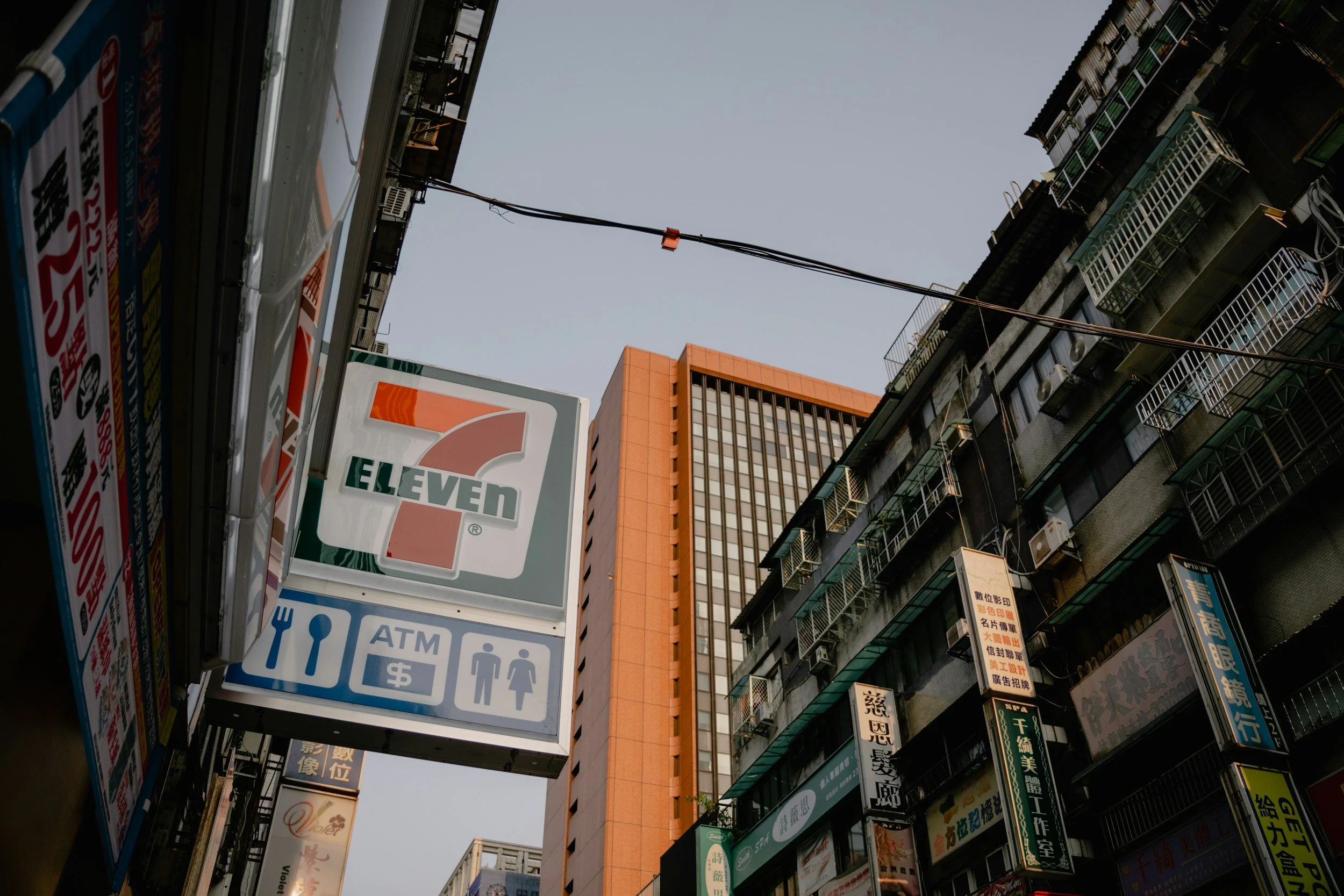

They're everywhere.
Seriously... everywhere.
One of the best things about cycling Taiwan is knowing that food, water, bathrooms, coffee, and even somewhere to escape the rain are usually just a few kilometers away.
I also found myself sitting in plenty of 7-Elevens journaling, resting, or simply waiting for the rain to pass before continuing the ride.
They became little rest stops throughout the journey.
Here are some important snacks that you can find in almost every convenience store:
Sweet Potatoes
Fresh cooked sweet potatoes became one of my favorite sources of energy.
They're packed with:
Complex carbohydrates
Fiber
Vitamins
Antioxidants
Unlike sugary snacks that give you a quick spike before crashing, sweet potatoes provide slow, steady energy that lasts much longer.
They're also inexpensive and available in almost every convenience store.
Boiled Eggs
Fresh boiled eggs became another daily snack.
They're affordable, easy to carry, and rich in protein, making them excellent for muscle recovery after long riding days.
Simple food often turned out to be the best food.
Pocari Sweat
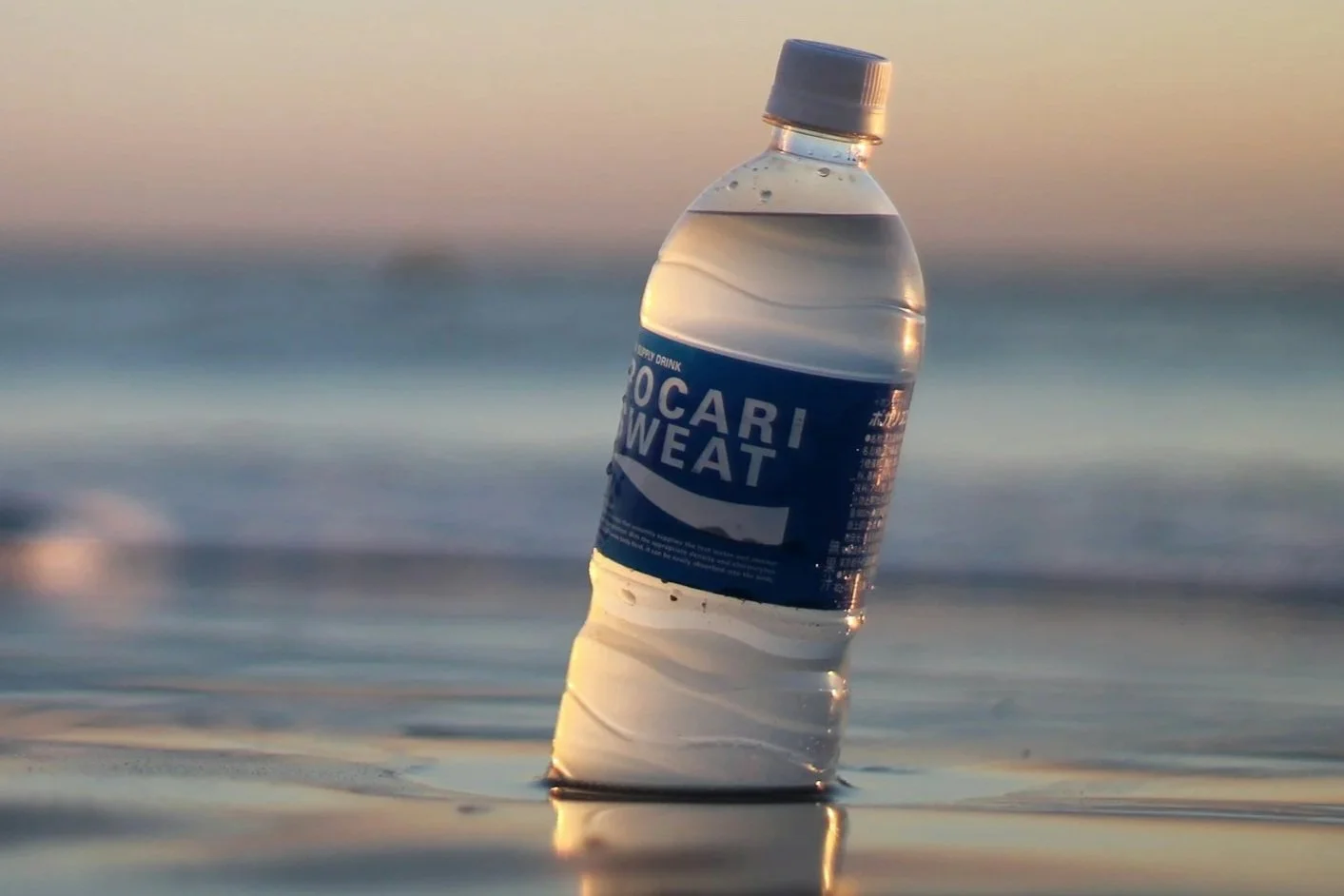
If there's one drink I'd recommend to every cyclist riding Taiwan, it's Pocari Sweat.
You'll find it in almost every convenience store, supermarket, and vending machine across the island.
During hot and humid riding days, you lose far more than just water.
You also lose electrolytes like sodium and potassium through sweat, which are essential for muscle function and preventing cramps.
Pocari Sweat helps replace those electrolytes much more effectively than plain water alone.
I usually drank one after particularly long or hot riding days, especially after climbing or riding into strong headwinds.
It became one of my favorite recovery drinks throughout the trip.
Experience Taiwan's Night Markets
I do highly recommend visiting the local night market whenever you stay overnight in a town or city. Most places around Taiwan have one, usually opening in the evening, and they're one of the best ways to experience the local culture.
You'll find delicious street food, local vendors, fresh fruit, traditional snacks, and small family-run stalls, often at much lower prices than restaurants.
It's also a great opportunity to interact with locals and experience everyday Taiwanese life. Whenever I arrived somewhere new, one of the first things I did was search for the nearest night market and check its opening hours. It quickly became one of my favorite parts of the journey.
Recovery After Long Riding Days
Recovery is just as important as cycling itself.
You can have the strongest legs in the world, but if you don't recover properly, tomorrow's ride will feel twice as hard.
One thing that became part of my daily routine was Tiger Balm.
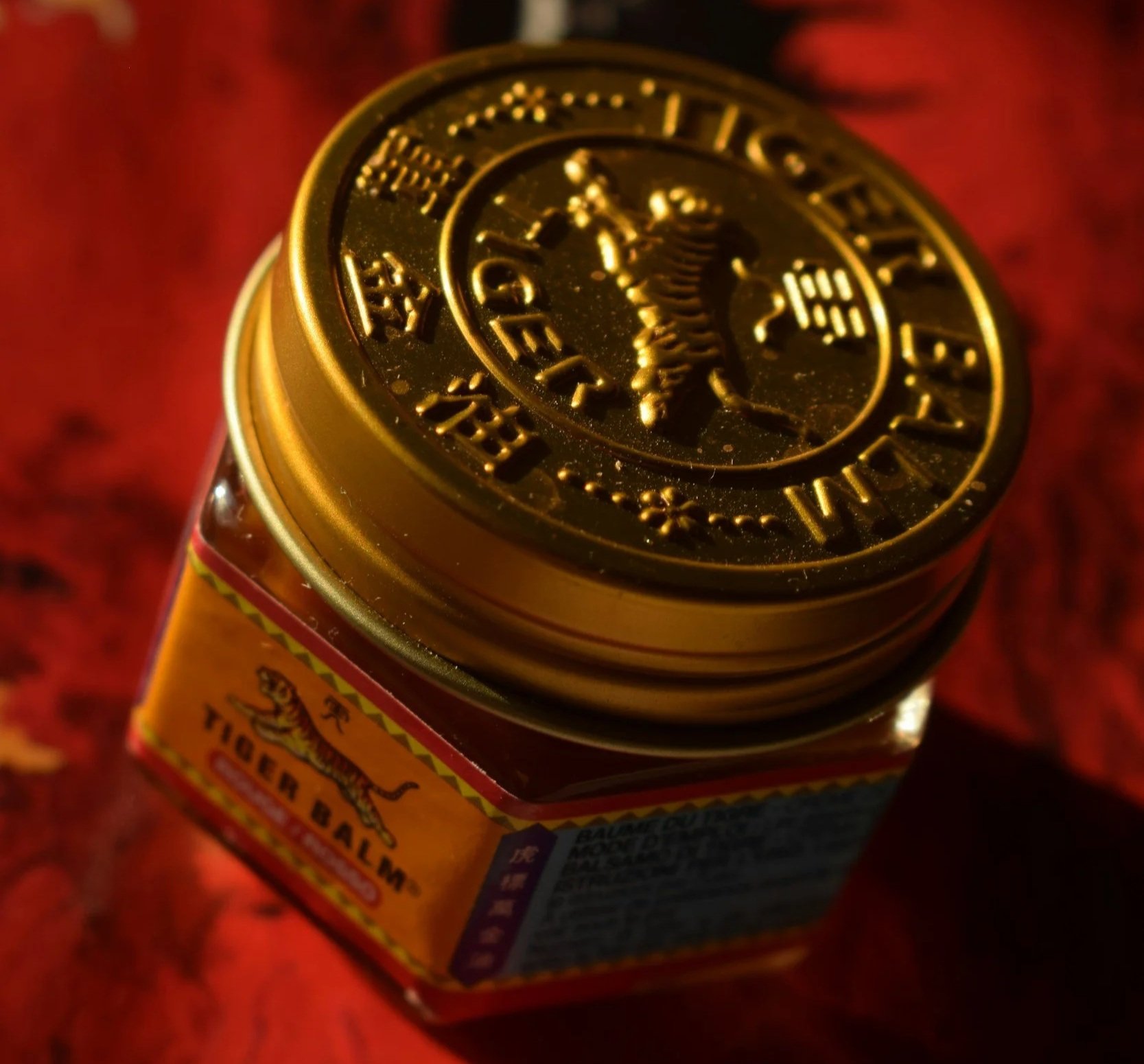
After spending hours on the bicycle, my legs, shoulders, neck, and lower back often felt tight and sore.
Applying Tiger Balm after a shower or before bed created a warming sensation that helped relax tired muscles and provided temporary relief after long days in the saddle.
It obviously doesn't magically remove fatigue, but it definitely made recovery much more comfortable.
Raising my legs on a pillow & Stretching every evening also became essential.
Just ten or fifteen minutes helped loosen my hips, lower back, hamstrings, shoulders, and neck before the next day's ride.
Eating enough calories, staying hydrated, and getting quality sleep were equally important.
Your body is working harder than you realize.
Treat it well.
Sunscreen Is More Important Than You Think
One mistake many cyclists make is underestimating Taiwan's sun.
Even when the weather doesn't feel extremely hot, the UV index can be very high.
Spending five to eight hours riding under direct sunlight can easily leave you sunburned before you even notice it's happening.
I highly recommend applying sunscreen before every ride and reapplying it throughout the day if you're spending long hours outside.
Not only does it protect your skin from painful burns, but it also helps prevent dehydration, skin damage, and unnecessary fatigue caused by prolonged sun exposure.
A small bottle takes almost no space in your panniers but makes a huge difference over a month-long trip.
Stray Dogs, Flies, and Mosquitoes
If you're riding through rural Taiwan, especially farming or industrial areas, you'll almost certainly come across stray dogs.
At first, these encounters felt stressful.
Eventually, they became surprisingly easy to handle.
An elderly Taiwanese farmer taught me a simple technique that worked every time.
Get off your bicycle.
Keep the bicycle between yourself and the dogs like a shield.
Then point your water bottle or, even better, a small stick toward them while speaking loudly and confidently.
The goal isn't to hurt them.
It's simply to show confidence.
Almost every time, the dogs backed away within seconds.
Like many things during this journey, it felt difficult at first, but became second nature by the end.
Flies were another story.
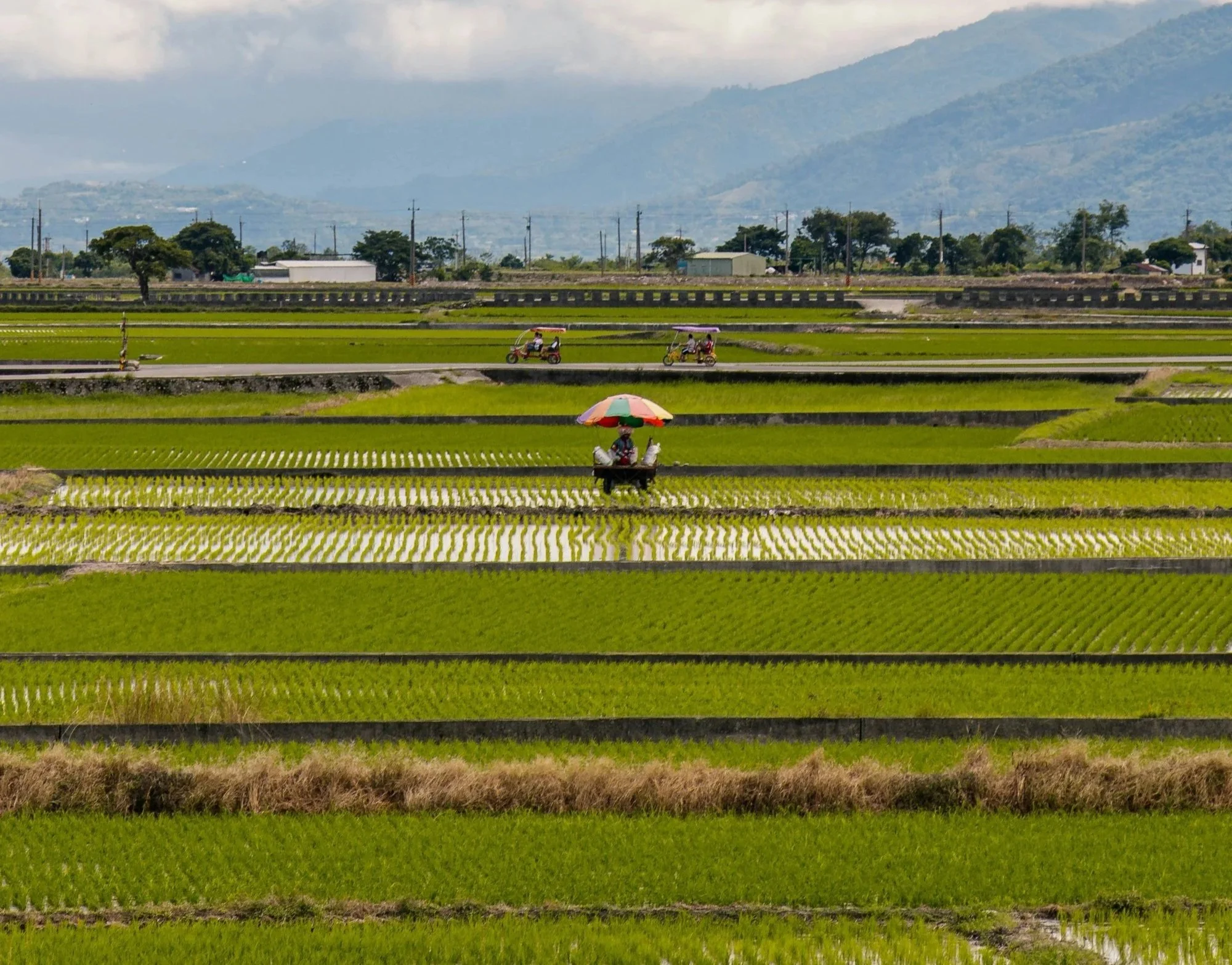
When riding through rice fields and farms, expect plenty of them.
Without sunglasses and a face covering, you'll quickly discover that flies have absolutely no respect for personal space.
Unless you're planning on having flies for lunch, I highly recommend both.
Mosquitoes can also become annoying, especially if you're camping, sitting outdoors in the evenings, or stopping near rivers and forests.
A small bottle of mosquito repellent quickly became another item I was happy I packed.
The Fangshan Mountain Crossing
One of the ways to cross between Taiwan's west coast and east coast begins after Fangshan.
For me, this became one of the most memorable days of the entire trip.
The ride begins with incredible ocean views on one side and dramatic mountains on the other.
Eventually, the road turns inland.
That's when the climbing begins.
This section isn't impossible, but it deserves respect.
The roads become narrower.
There are sharp corners.
Large trucks share the same road.
If you add rain or strong winds, it becomes even more challenging.
One section of roughly seven miles was probably the toughest riding of the trip for me.
Between the climbs, the trucks, and the narrow roads, it demanded my full attention.
Fortunately, once I reached VuVu Restaurant, everything immediately felt worth it.
After hours on the bike, I treated myself to one of the healthiest and most satisfying meals of the entire trip.
Their sage noodles were honestly one of my favorite dishes I ate anywhere in Taiwan.
Right next to the restaurant is Shuangliu National Forest Recreation Area.
If you have time, don't skip it.
It's a beautiful place for:
Forest bathing
Meditation
Waterfall walks
Monkey watching
After leaving the forest, the climbing continues for a while, but traffic becomes much lighter, making the ride feel much more relaxed as you eventually descend toward Taiwan's east coast.
The Most Beautiful Stretch of the Entire Ride
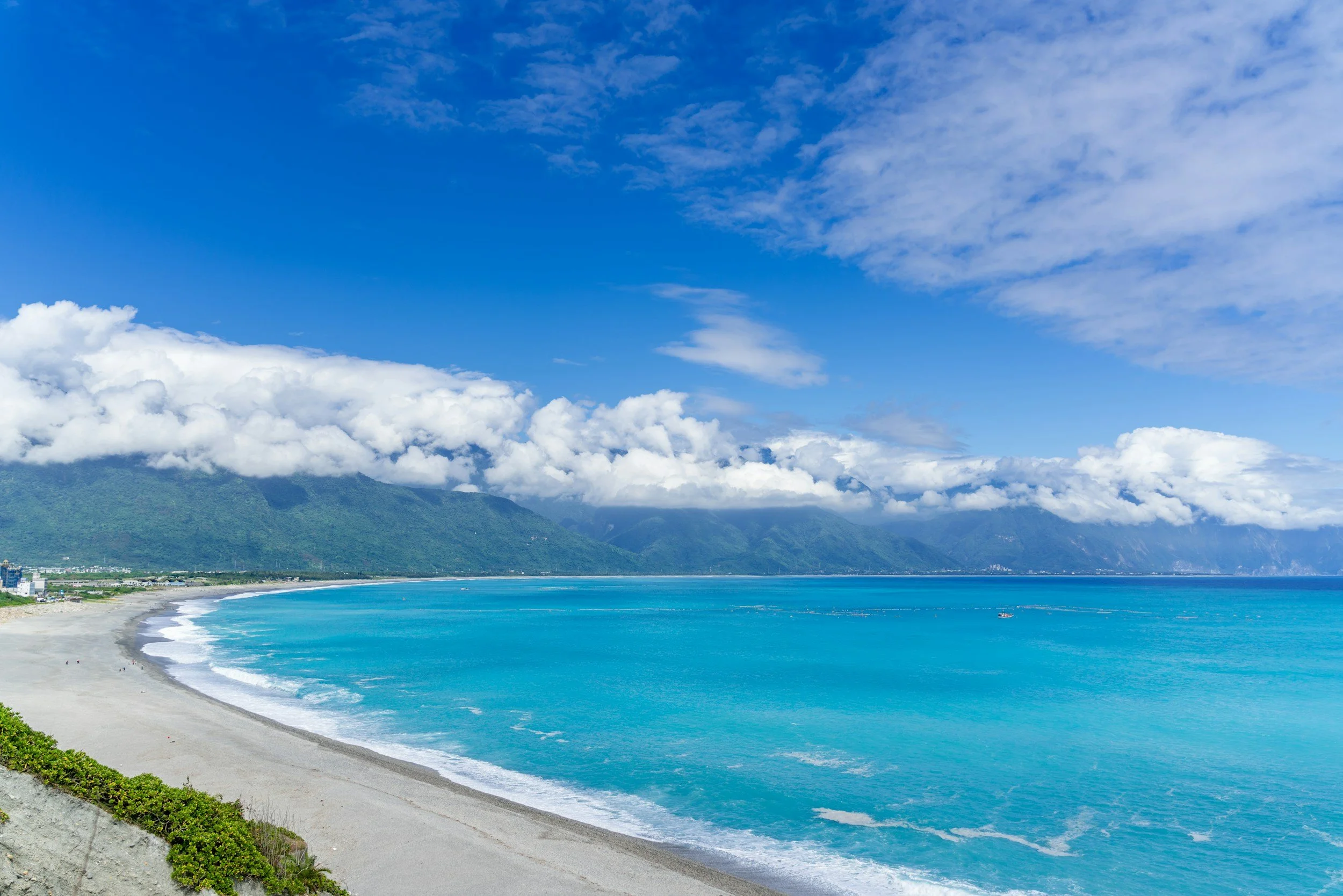
If I had to choose one section of Taiwan to ride again tomorrow, it would be the stretch between Taitung and Hualien.
For me, this was easily the most beautiful part of the island.
The road follows the coastline while mountains rise dramatically beside the Pacific Ocean.
You'll ride through peaceful surfing towns, forests, rivers, beaches, and endless ocean views.
The roads are smooth.
Traffic is relatively light.
The scenery changes constantly.
Every few kilometers there's another viewpoint that makes you want to stop.
Of course, beauty is subjective.
Everyone has their favorite part of Taiwan.
But this stretch completely stole my heart.
It was one of those roads where you almost forget you're exercising because you're too busy looking around.
Just don't forget to keep your eyes on the road.
A Refreshing Stop: Free Public Hot Springs Near Tamasato
Right next to Tamasato Hot Spring is a free public hot spring that I highly recommend stopping at. While Tamasato offers a private hot spring experience, the public bath just across the road is completely free and makes one of the most refreshing stops on the entire ride. After hours of cycling, soaking in the warm mineral-rich water felt incredible. It helped relax my tired muscles, eased away the soreness from the road, and gave both my body and mind a chance to recover. If you're cycling around Taiwan, don't rush past this spot. Spending an hour here can leave you feeling recharged and ready for the next stage of your journey.
Hualien to Su'ao: Why I Took the Train
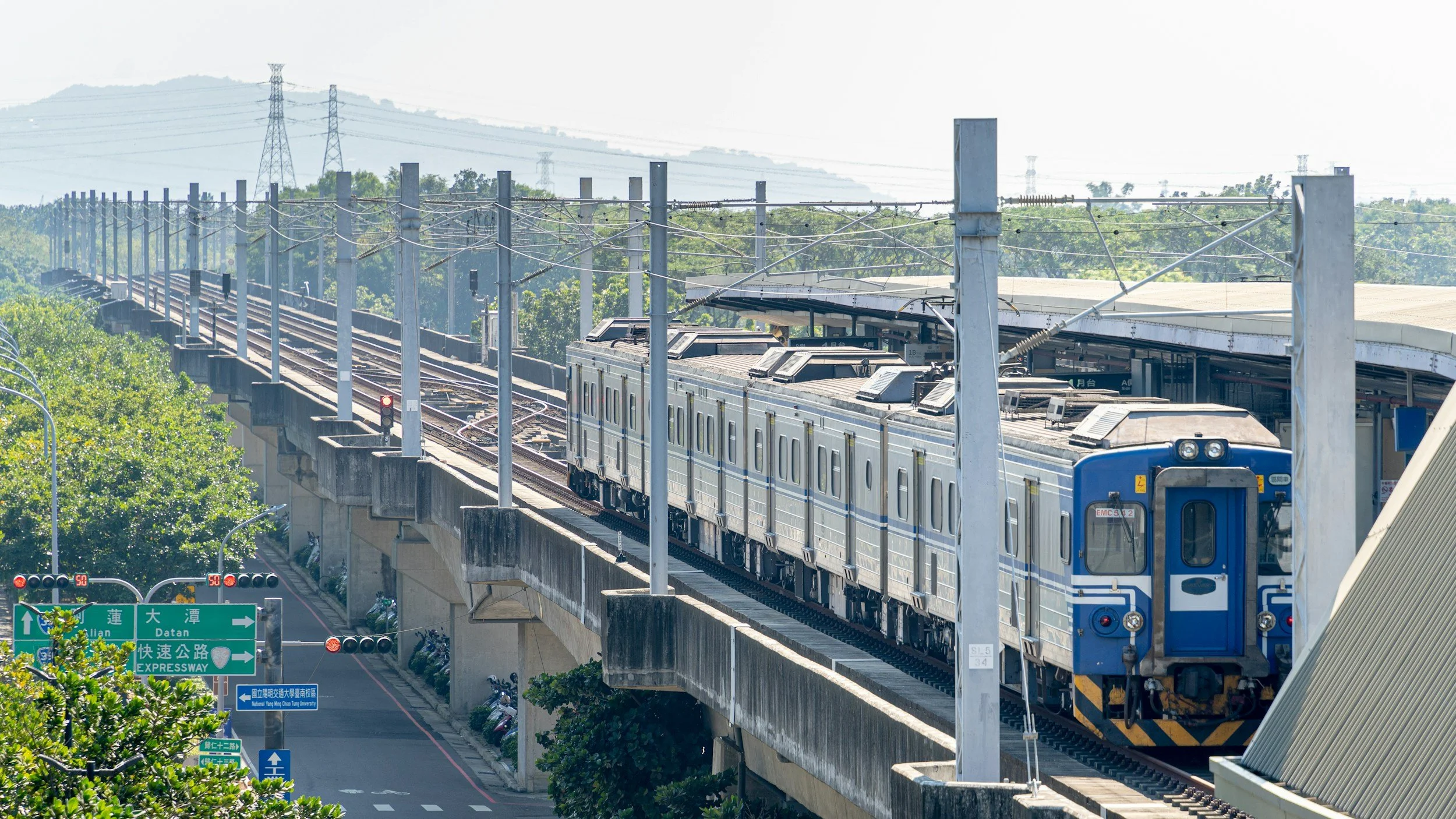
One section of the route that often gets discussed among cyclists is the ride between Hualien and Su'ao.
Originally, I planned to cycle it as well.
Unfortunately, during my trip the road was closed, so I had no choice but to take the train.
If you're planning your own ride, always check the latest road conditions before heading out.
Taiwan's eastern coast occasionally experiences earthquakes, landslides, typhoons, and temporary road closures. Conditions can change quickly.
Taking the train allowed me to continue the journey safely and without losing time.
If the road happens to be open during your trip, you can decide for yourself whether you'd rather ride it or take the train. Everyone has different comfort levels, and there's no right or wrong decision.
The important thing is making it around the island safely.
From Su'ao to Jiufen
The ride from Su'ao to Jiufen was one of the biggest surprises of the trip.
I honestly wasn't expecting to enjoy it as much as I did.
The route winds through forests, mountains, rivers, and one of Taiwan's most fascinating cycling tunnels.
Along the way you'll pass through the Old Caoling Tunnel, a former railway tunnel that was once one of the longest railway tunnels in Taiwan before being converted into a cycling path.
Riding through it feels like travelling back in time.
After leaving the tunnel, there's a little climbing, but every meter is worth it.
Eventually you arrive at one of Taiwan's most beautiful towns.
Jiufen
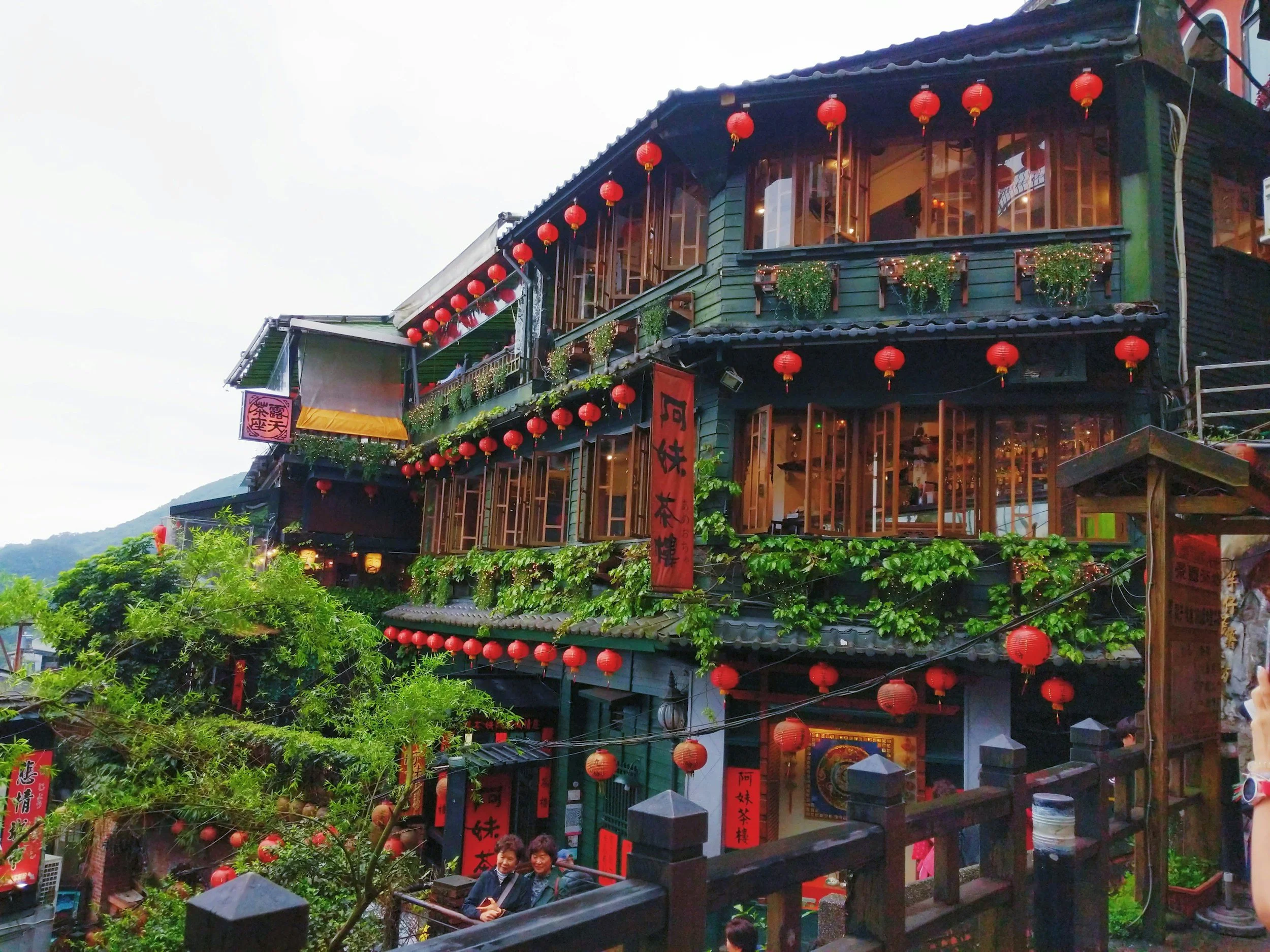
Jiufen feels completely different from anywhere else on the island.
Narrow alleyways.
Red lanterns.
Traditional tea houses.
Mountain views overlooking the Pacific Ocean.
Tiny staircases connecting hidden cafés and local shops.
Many people believe Jiufen inspired scenes from the Japanese animated film Spirited Away, and although that has never been officially confirmed, it's easy to understand why people make the connection.
The atmosphere becomes even more magical after sunset.
Most tour groups leave in the late afternoon, leaving the streets much quieter.
I highly recommend staying one or two nights instead of visiting only during the day.
Once the crowds disappear, Jiufen becomes peaceful, romantic, and incredibly photogenic.
It was the perfect place to slow down before finishing the final ride back to Taipei.
The People of Taiwan
Let’s start by saying no word can explain how amazing Taiwanese people are; they exceeded every expectation I had.
At first, you might think people seem quiet or reserved.
They don't usually smile at strangers the way people do in some Western countries, but don't mistake that for unfriendliness.
Throughout the trip, I experienced nothing but kindness.
People offered directions before I even asked. Some gave us drinks.
Others handed us snacks for the road.
Many simply stopped to encourage us after seeing the loaded bicycles with thumbs up.
Even though English isn't widely spoken outside Taipei, people always tried to help.
Sometimes through Google Translate.
Sometimes through hand gestures.
Sometimes with nothing more than a smile.
Hospitality doesn't always have to be loud.
Taiwan taught me that kindness is often shown through actions rather than words.
Fun Things to Do While Cycling Taiwan
Cycling all day gives your brain plenty of time to notice random things.
One of the funniest things I started noticing was...
Single farming gloves.
Not pairs.
Just one glove.
Everywhere.
I have absolutely no idea how.
I probably counted over one hundred of them during the trip.
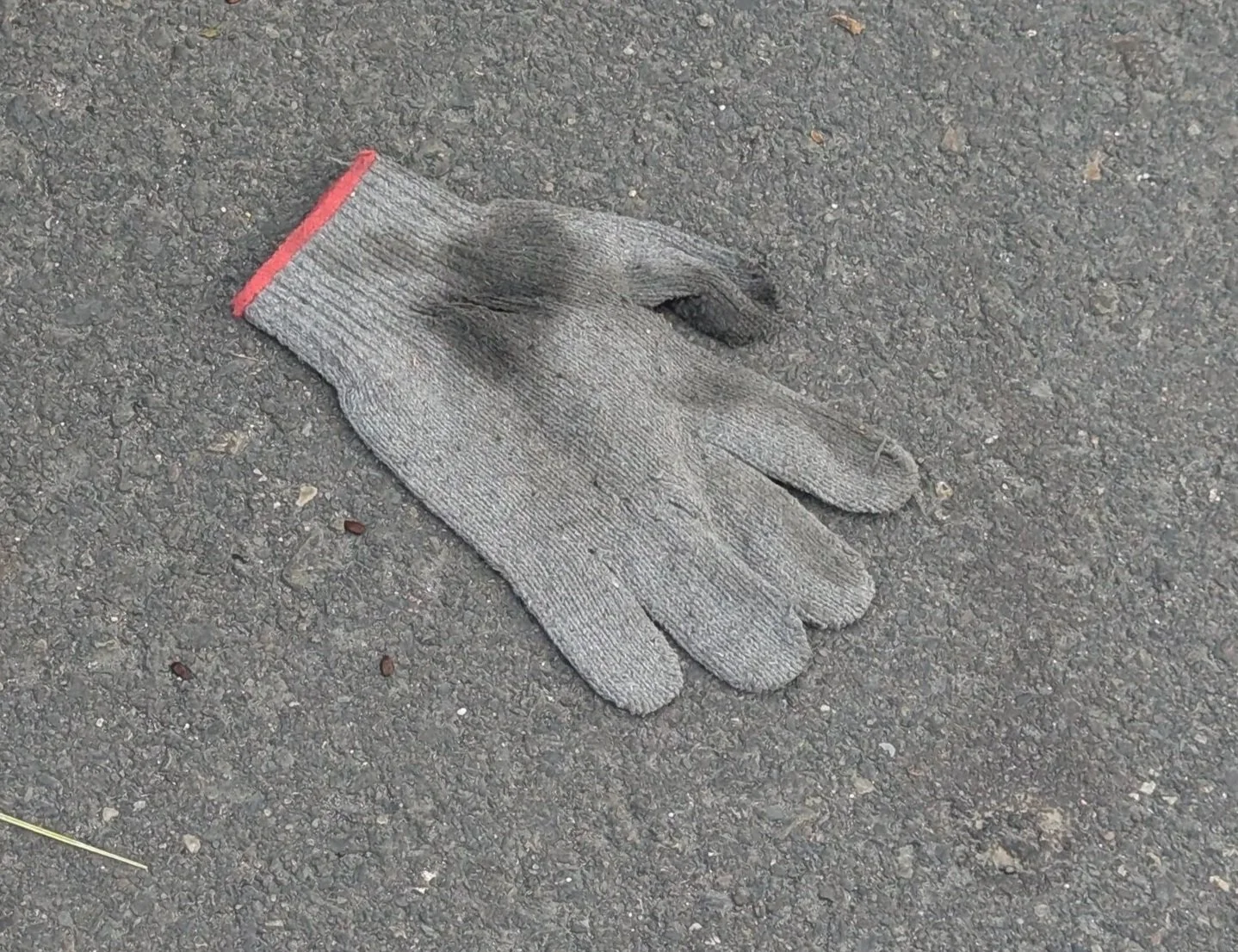
My only explanation is that they somehow fall off farmers' scooters, trucks, or tractors.
Eventually, it became a game.
Every day, I found myself wondering how many lonely gloves I'd spot before reaching my destination.
It's basically Taiwan's version of a scavenger hunt.
Another game I accidentally started playing was identifying crops.
Taiwan has an incredibly rich agricultural landscape.
Throughout the ride I spotted:
Rice
Pineapple
Wax Apple
Banana
Mango
Dragon Fruit
Guava
Papaya
Lemon
Lime
Kumquat
Roselle
Tea
Sugarcane
Orange
Mandarin
Tomato
Annona
Strawberry
Corn
Wheat
Cabbage
Cucumber
Bamboo
...and I'm sure I missed many more.
One thing I really enjoyed was slowing down enough to notice the changing scenery.
Not just visually.
Even the smell of the air changes depending on what you're riding past.
Rice fields smell different from tea plantations.
Sugarcane smells different from fruit farms & cutruses.
These are tiny details that most people driving a car will never notice.
Final Thoughts
Before starting this journey, I remember thinking:
Your legs will hurt.
You'll question why you started.
The weather will test you.
There will be days when the wind feels stronger than you.
Days when the rain doesn't stop.
Days when the climbs seem endless.
Then somewhere around Day 18 for me personally...
Something changes.
You feel stronger.
Your body adapts.
Your confidence grows.
Your mind becomes quieter.
The things that seemed important before slowly fade into the background, replaced by a much simpler rhythm.
Wake up.
Ride.
Eat.
Rest.
Repeat.
By the end of the journey, I genuinely felt like a monk on wheels.
This trip was never just about cycling Taiwan only.
It was about balance.
Between work and travel.
Between movement and stillness.
Between physical strength and mental clarity.
I wasn't racing around the island.
I was simply moving through it.
Taking my time.
Feeling the culture.
Living the traditions.
Meeting people.
Working from cafés.
Meditating in parks.
Stretching on random sidewalks.
Journaling in 7-Eleven while waiting for the rain to stop.
Allowing the road to teach me instead of trying to conquer it.
Perhaps the biggest lesson this journey reinforced was something I already knew, yet often forget.
Everything is impermanent.
The suffering.
The joy.
The difficult climbs.
The easy descents.
The headwinds.
The tailwinds.
The beautiful moments.
The uncomfortable moments.
Nothing stays forever.
Just like this journey around Taiwan.
One day I was standing in Taipei looking at a bicycle that would soon carry me around an island I barely knew.
Then, almost without realizing it, I was back where I started.
The journey had a beginning.
And it had an end.
Just like everything else in life.
Knowing that made me appreciate every single moment on the road even more.
In a world that often feels loud, rushed, and chaotic, this trip reminded me that peace is still available to us.
Sometimes all we have to do is to slow down enough to notice it.
One pedal stroke at a time.
