
How to Start a Daily Meditation Routine and Actually Stick to It
Starting a daily meditation routine is super easy, but sticking to it is what most people struggle with. Not because meditation is complicated, but because we approach it like another task on a to-do list instead of something that supports our life.
Meditation isn’t about escaping reality, forcing the mind to be quiet, or becoming someone else. It’s about learning how to live with more awareness, calm, and honesty.
When meditation becomes part of your lifestyle, consistency happens naturally. For example, we wake up and think, “I need to meditate for 15 minutes today,” the same way we think, “I need to answer emails or buy groceries.” If the day gets busy, meditation is the first thing to be skipped. Or we rush through it, watching the clock, waiting for it to be over so we can move on to the next task.
When meditation is approached like this, it starts to feel like pressure instead of support. And this is wrong because meditation is not supposed to be another obligation in life. It’s meant to help you feel more grounded, present, and calm within your daily life. Once it stops being a task and starts becoming something you naturally return to, consistency becomes much easier.

Start With Intention, Not Discipline
Most people try to start meditation by relying on discipline. That rarely lasts. What does last is intention.
Ask yourself why you want to meditate daily. Better sleep. Less anxiety. A calmer nervous system. Feeling more grounded. More clarity. More presence.
Your intention becomes the foundation of your meditation practice. When life gets busy or your mind feels restless, that intention is what brings you back.
Keep Your Daily Meditation Simple
The best way to start a meditation routine is by starting small, then going bigger and bigger. Starting with long sessions, complex techniques, or high expectations usually leads to burnout.
A daily meditation routine can start with just 10 minutes. That’s enough to calm the nervous system, slow the mind, and build consistency. Meditation works through repetition. Short and daily is far more powerful than long and occasional.
Once the habit feels natural, the practice grows on its own.
Choose a Time That Fits Your Life
There’s no perfect time to meditate. There’s only the time you can actually commit to whatever works with your daily life.
Morning meditation helps set the tone for the day, creating clarity, calm, and focus. Evening meditation helps release stress and prepare the body for deeper sleep.
Choose one time and stay consistent. Over time, your body and mind begin to recognize that moment as a signal to slow down.
Create a Small Ritual Around Your Practice
The brain learns through repetition and association. Simple rituals help build a meditation habit.
This can be:
Sitting in the same place every day
Using a cushion or chair
Wearing an eye mask
Lighting incense or sage
Playing a sound bath
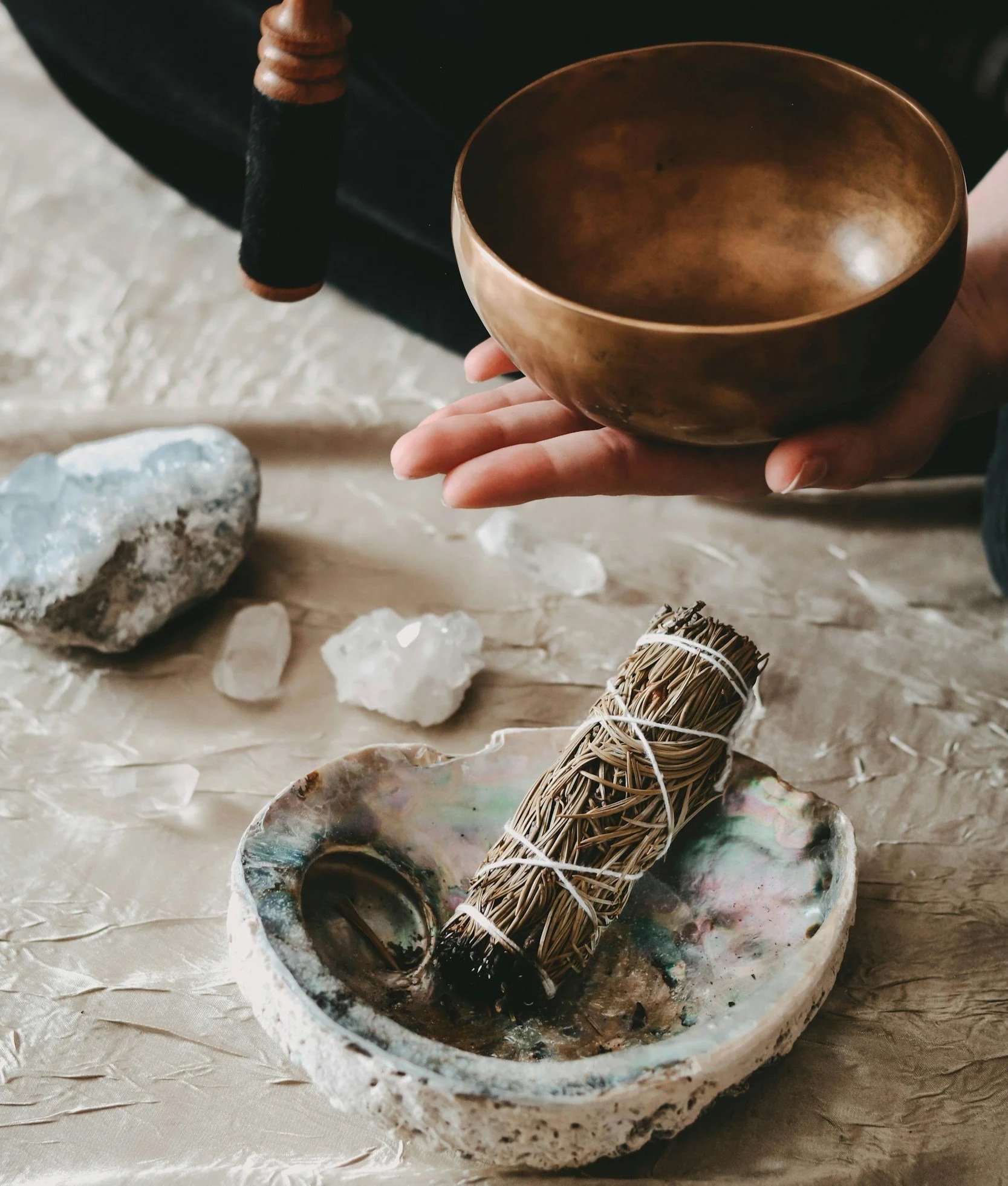
These small simple rituals tell your nervous system that it’s safe to relax. Meditation becomes familiar instead of forced.
Use the Breath as Your Anchor
Meditation isn’t about stopping thoughts. Thoughts are normal. The practice is learning how not to get carried away by them.
The breath is the simplest and most effective anchor. Slow breathing with longer exhales activates the parasympathetic nervous system and helps the body shift out of stress mode.
When the mind wanders, gently return to the breath. No judgment. No frustration. That return is the practice.
Stillness Comes Before Depth
You don’t need to chase deep experiences. Stillness comes first.
Sit tall, keep the spine straight, and allow the body to settle. Physical stillness supports mental stillness. Even when thoughts are active, the body learns calm through consistency.
Meditation builds patience, awareness, and self-discipline over time, not overnight.
Guided Meditation and Sound Baths Are great tools
There’s no rule that meditation must be silent. Guided meditations, sound baths, and breath-led practices are powerful tools, especially when building a routine.
Sound and guidance give the mind something gentle to focus on, helping reduce overthinking and restlessness. What matters most is showing up consistently.
Bring Meditation Into Daily Life
A daily meditation routine doesn’t end when you stand up.
Mindful pauses, conscious breathing, slowing reactions, and honoring your intentions throughout the day reinforce the practice. This is how meditation becomes a lifestyle, not just something you do on a cushion only.
Over time, meditation strengthens neural pathways, improves emotional regulation, and builds self-trust.
Consistency Over Perfection
Some days will feel calm. Some days will feel distracted. Both are part of the process.
The goal isn’t to meditate perfectly. The goal is to show up.
With consistent daily meditation, many people experience:
Reduced stress and anxiety
Better sleep and focus
A calmer nervous system
Stronger emotional awareness
A deeper connection to themselves
Final Thoughts
Starting a daily meditation routine doesn’t require changing your life or becoming a monk. It requires meeting your life with more presence.
Start small. Stay consistent. Keep it real.
Meditation isn’t about becoming someone new. It’s about understanding yourself more clearly and living with more ease.
If you’re looking for a structured but simple way to build meditation into daily life, this is exactly what Meditation as a Lifestyle was created for not as another course to complete, but as a practice to live with. You can also explore the free Sound Baths and Guided Meditations on Sahra Healings, which are there to support you in building a steady, realistic meditation routine that fits into your everyday life.
