
From the Levant With Love: Healing Spices.
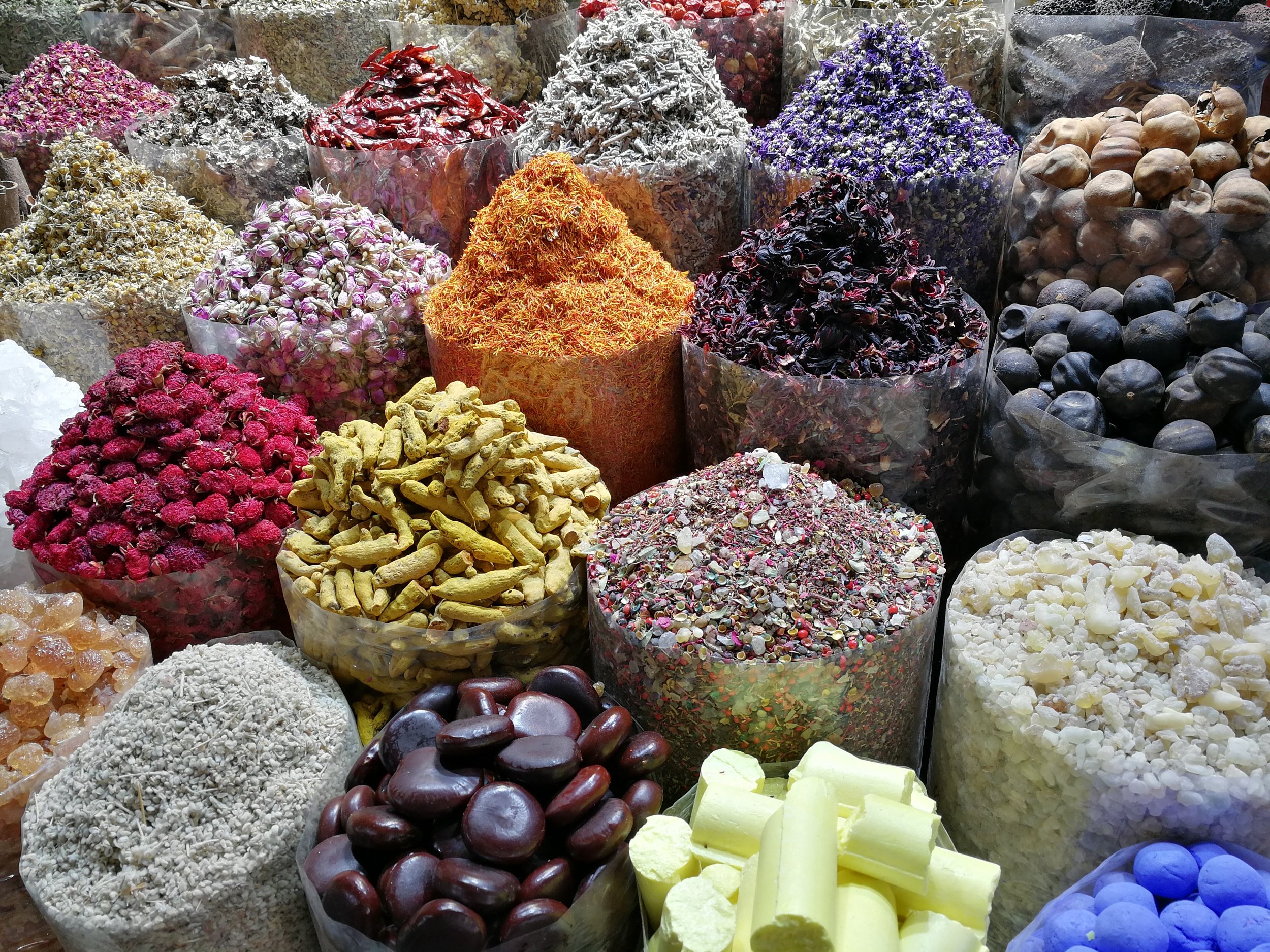
Spices display in Old Souq, Abu Dhabi, UAE.
When people hear the word The Levant, many do not know what it really means. For me, it is not just a region. It is home, memories, and the fragrance of spices that shaped my childhood.
The Levant is the Eastern Mediterranean, the lands of Syria, Jordan, Palestine, and Lebanon. A place where you can drive from golden deserts to pine-covered mountains, cross lush valleys, follow rivers, and end up by the Mediterranean coastline all in a single day. The landscape is diverse, warm, and deeply alive.
What truly defines the Levant is its food, and at the heart of that food are the spices. These spices are not used to make dishes spicy. They are used to make them soulful. Walk into any old town spice shop and you will understand immediately. I still remember walking with my father through those narrow alleys. Shelves reaching all the way up to the high ceiling, mountains of colorful spices stacked like art installations, and a deep grounding aroma I can still smell in my mind today.
Among the hundreds of spices, a few classics always sit right at the front. The ones you cannot enter a Levantine home without seeing. Zaatar, Sumac, then followed by Caraway. These spices have been used not only for cooking but also as natural medicine for thousands of years, with records dating back as far as sixteen hundred BCE.
Here, I will walk you through their history, flavors, colors, aromas, health benefits, and a simple recipe for each. Explained in the same way I would describe them to a friend sitting with me over a cup of tea.
Zaatar
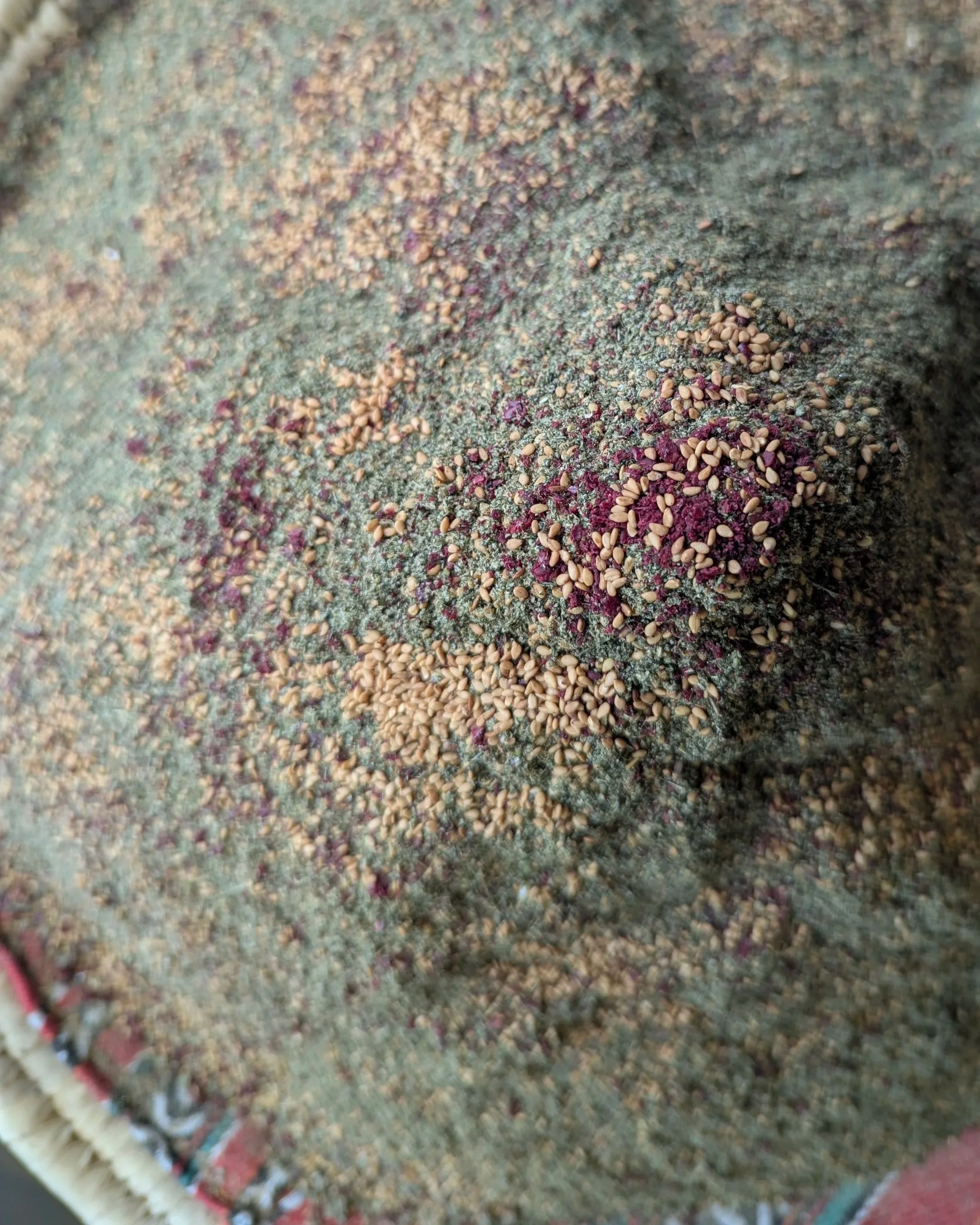
Zaatar blend.
History
Zaatar has deep roots in the Levant, growing wild in the mountains of Palestine, Lebanon, Syria, and Jordan, and belonging to the same botanical family as oregano and thyme. Its use dates back to ancient Egypt, where it was valued for its medicinal properties, and over the centuries it evolved into the beloved spice blend we know today, typically made with dried zaatar leaves, sumac, sesame seeds, and salt. By the twelfth century, zaatar had become a staple across the region, celebrated not only for its bold, earthy flavor but also for its symbolic meaning. In Palestinian culture, it’s still known as “brain food,” a belief passed down through generations that a morning meal with zaatar sharpens the mind and supports memory. Growing up, many of us heard the same phrase at home, “eat your zaatar in the morning, it makes you think better”.
Flavor, Color and Aroma
Flavor: woodsy, earthy, and herby, similar to oregano and thyme but deeper.
Color: dark green leaning toward brown.
Aroma: strong, sharp, earthy, and beautifully complex.
Health Benefits
Supports memory and focus.
Improves digestion and reduces bloating.
Helps with colds and coughs, especially as tea.
Natural antibacterial and antifungal properties.
Anti-inflammatory.
Provides natural energy.
Rich in vitamins A and C, iron, magnesium, and calcium.
Simple Recipe: Palestinian Zaatar and Olive Oil Jar
Ingredients
1 cup of za’atar blend, which is typically purchased already mixed.
½ cup extra virgin olive oil.
Instructions
If you want to make za’atar from scratch, combine dried za’atar (2 parts), sumac (2 parts), toasted sesame seeds (1 part), and salt (½ part).
Mix the zaatar with the olive oil until it becomes a loose paste.
Place the mixture in a clean jar.
Add a thin layer of olive oil on top to keep it fresh.
Store at room temperature. It stays good for months.
Enjoy it with warm pita any time you want a simple and healthy snack.
Sumac
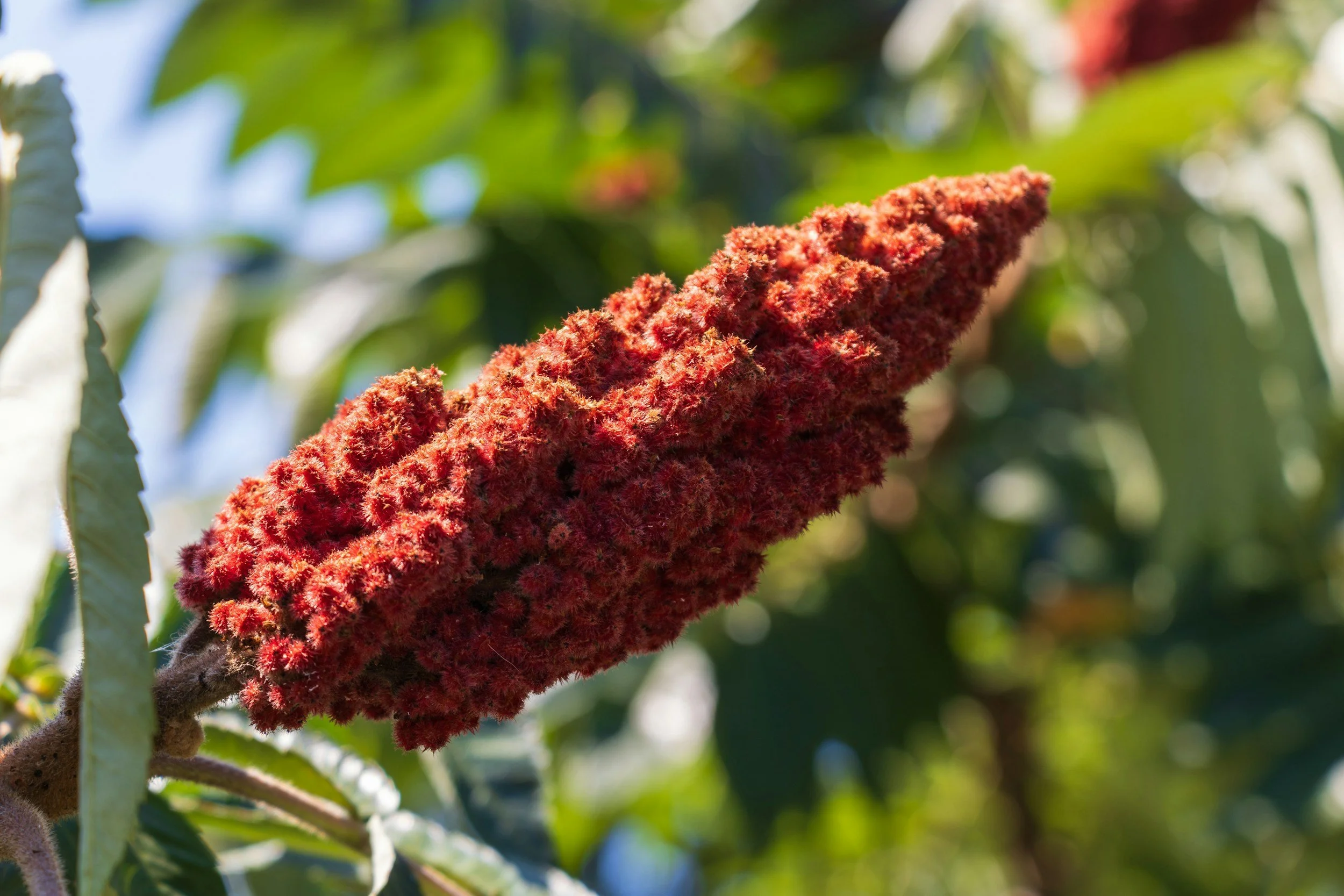
Sumac flowers.
History
Sumac has one of the oldest culinary and medicinal histories in the world. The Sumerians, Babylonians, Greeks, and Romans all used it not only as a spice but also as a natural remedy for digestion and inflammation. Its name comes from the Aramaic word summaq, meaning ‘dark red,’ a reference to the deep ruby color of the dried berries. In the Levant, sumac became essential long before lemons were common, adding brightness and acidity to dishes, and it remains a defining flavor in Palestinian, Lebanese, and Syrian cooking today.”
Flavor, Color and Aroma
Flavor: tart, lemony, lightly acidic, softer than lemon juice.
Color: rich reddish purple with a deep crimson tone.
Aroma: citrusy, slightly floral, and pleasantly sour.
Health Benefits
Rich in antioxidants.
Supports healthy blood sugar.
Reduces inflammation.
Improves cholesterol and supports heart health.
Helps digestion and reduces stomach discomfort.
Antimicrobial properties.
Simple Recipe: Roasted Eggplant with Olive Oil and Sumac
Ingredients
1 large eggplant.
3 tablespoons olive oil.
2 tablespoons tahini.
2 teaspoons sumac (more for topping).
2 tablespoons lemon juice.
1 small garlic clove, minced.
Instructions
Roast the eggplant until the skin is charred and the inside is very soft.
Let it cool slightly, then scoop the flesh into a bowl.
Mash the eggplant until smooth or leave it a bit chunky.
Mix in the tahini, olive oil, lemon juice, sumac, garlic (if using), and salt.
Taste and adjust: add extra sumac for more tang, or more tahini for creaminess.
Drizzle with olive oil and sprinkle more sumac on top before serving.
Store in the refrigerator for up to 4 days.
This dip tastes amazing with pita or vegetables.
Caraway
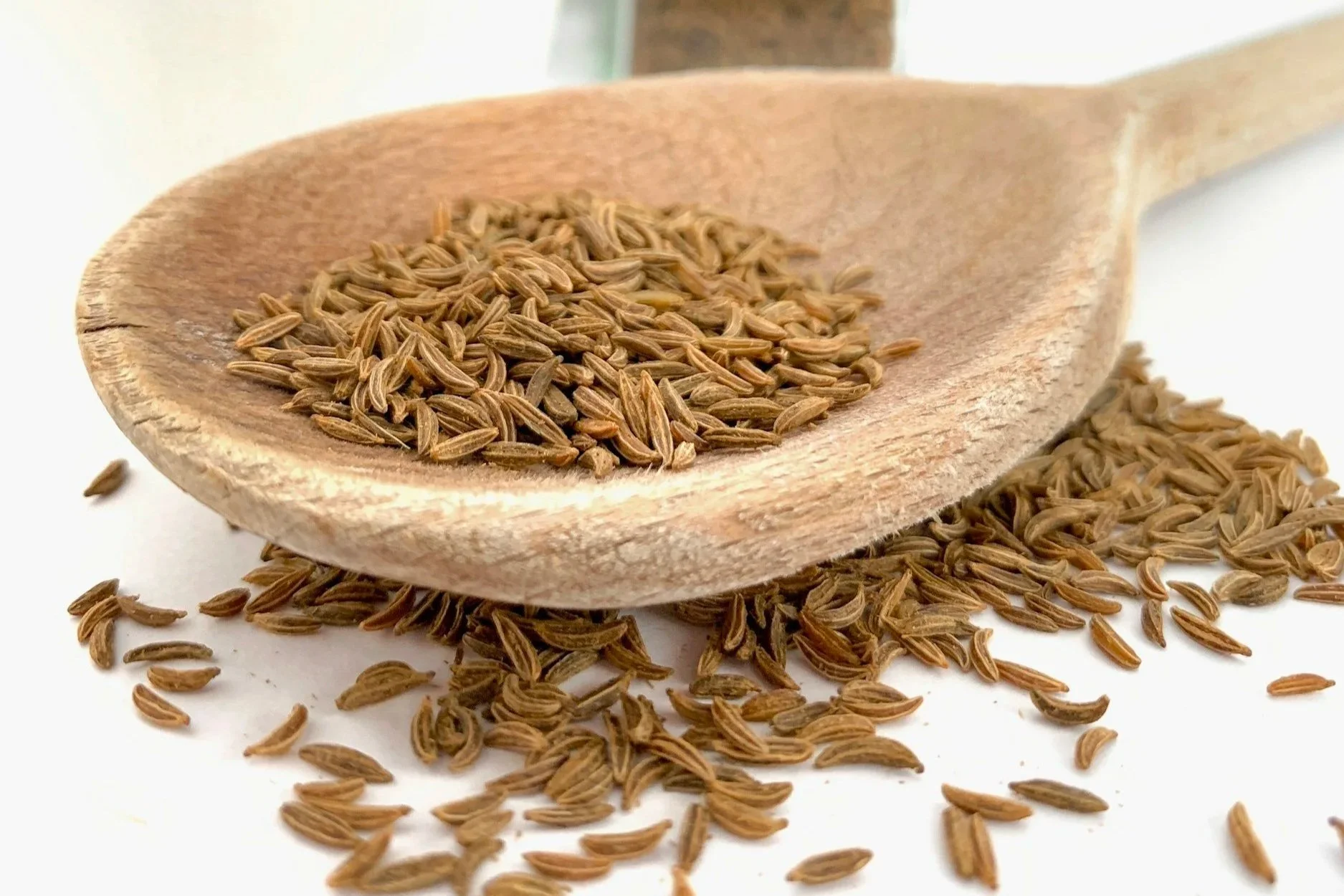
A spoon of Caraway seeds.
History
Caraway originates from Western Asia and has been an essential part of Middle Eastern life for thousands of years. The ancient Egyptians valued caraway seeds deeply, have even been found in burial sites as offerings for the afterlife. In the Levant, it became one of the earliest spices used in both cooking and traditional medicine, appreciated for its warming qualities and soothing effect on digestion. Its long history shows how closely it’s woven into daily life and cultural rituals. Even today, in Levantine communities, caraway plays a special role after childbirth: families prepare a warm, sweet caraway pudding called karawiya to celebrate the new mother and baby, symbolizing protection, healing, and new beginnings.
Flavor, Color and Aroma
Flavor: warm, earthy, slightly sweet, with hints of licorice and citrus.
Color: small seeds ranging from light to dark brown.
Aroma: warm, spicy, earthy, with a gentle bittersweet note.
Health Benefits
Supports gut health.
Helps relieve IBS symptoms.
Improves digestion.
Provides antioxidants.
Anti-inflammatory.
Helps regulate blood sugar.
Improves iron absorption.
Supports breastfeeding by naturally boosting milk production and providing essential minerals like iron and zinc for both mother and baby.
Simple Recipe: Healthy Karawiya
Ingredients
Half cup rice flour.
One tablespoon caraway.
One tablespoon cinnamon.
One tablespoon anise.
Four cups water.
Natural sweetener such as maple or honey.
Instructions
Mix all ingredients with water in a pot.
Cook on low heat while stirring until it thickens.
Sweeten with maple syrup or date syrup.
Serve warm and top with nuts if you like, such as almonds, walnuts, pine nuts & pistachios.
A traditional Levantine dessert with a lighter and healthier twist.
Final Thoughts and a Touch of Mindfulness
These three spices are only a small part of the rich world of Levantine flavors. They carry history, culture, healing, and beauty. When you add spices to your food, you are not only feeding your body. You are feeding your senses.
The colors, the aromas, the flavors, they help you slow down and enjoy your meal. You naturally become more mindful, more present, and more connected to the moment, enjoying every single bite.
If you want to deepen this kind of mindful living, this is also the heart of my online course Meditation as a Lifestyle. It offers simple ways to bring calm, awareness, and balance into your daily routines for a happier life.
